Reflections from Peru
Tomorrow at this time I’ll be in the Lima airport waiting to fly home after spending three weeks in Peru. It has been an interesting trip, to say the least, and has left me with lots to think about. The trip did not go quite as expected, and I am resolved to return so that I can complete some of the adventures we were not able to finish. Special shout out to Alicia and Julio, Maria’s parents, and all her various cousins and aunts and uncles and friends who welcomed us into their homes and into their lives. I couldn’t have asked for a more loving reception.
Before I leave this beautiful country I thought I’d share some of my takeaway observations and lessons learned that I picked up along the way:
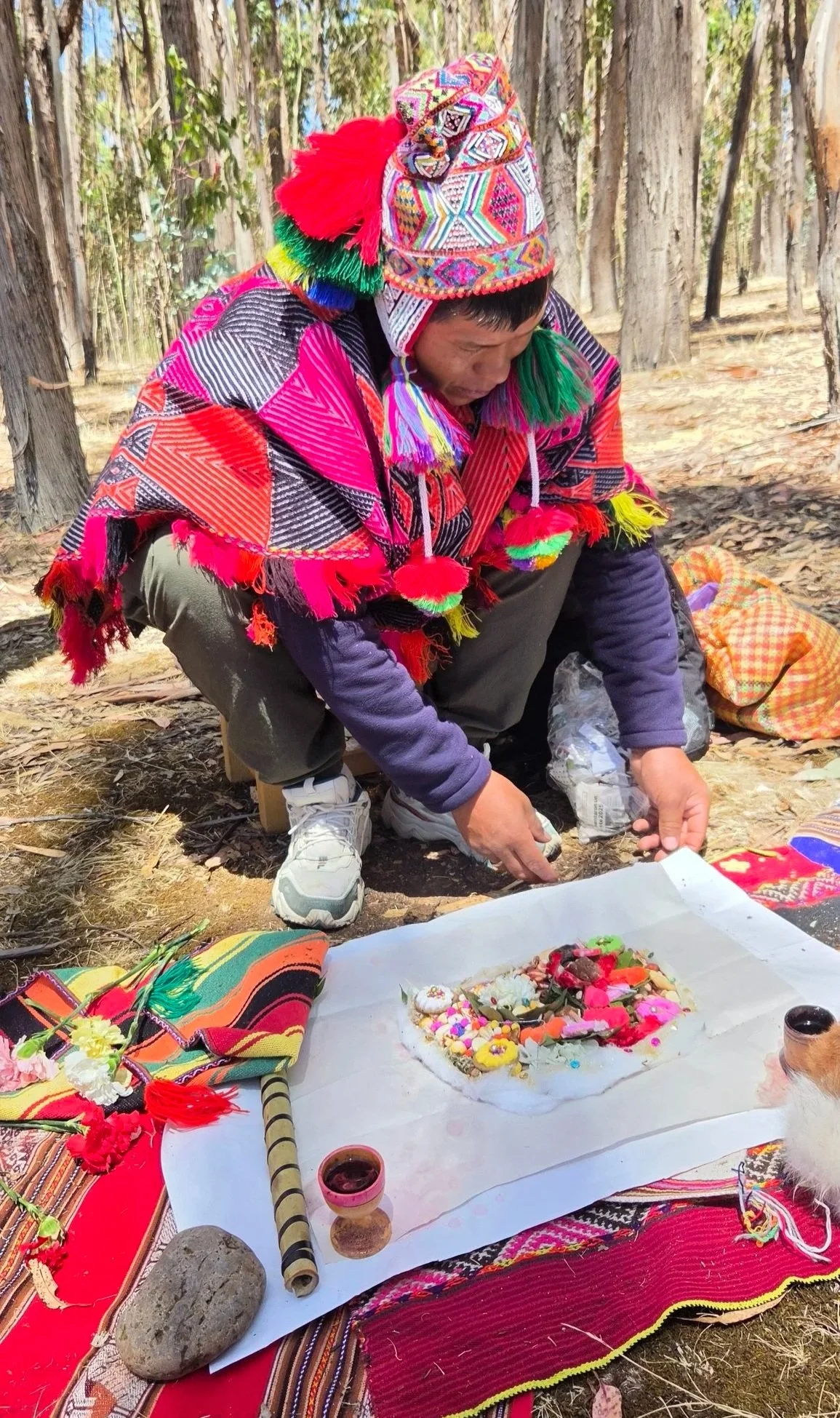
One of the highlights of the trip was participating in an Incan blessing ceremony for Conrad and Maria. They celebrated their second wedding anniversary in Peru.
Observations (in no particular order)
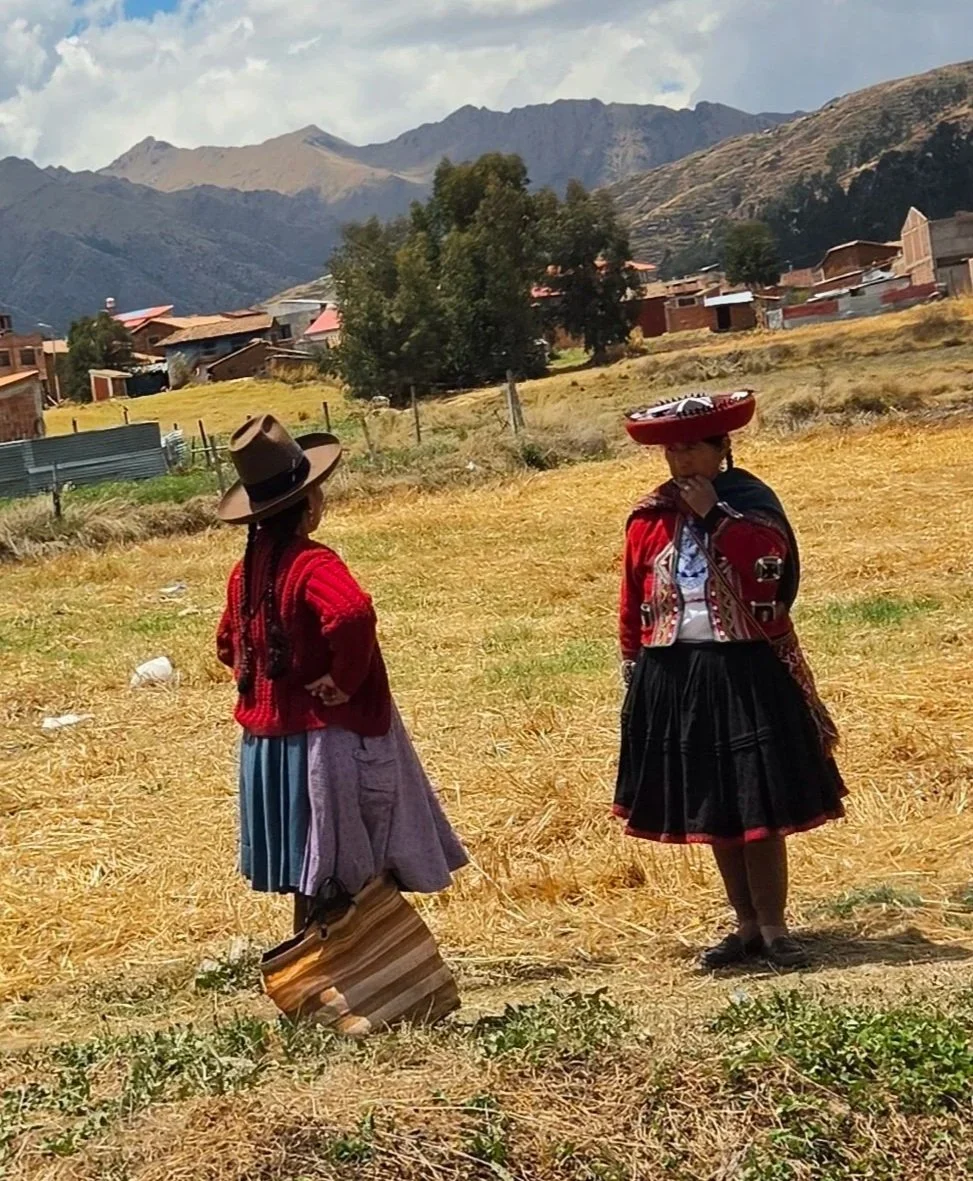
Yes, in the mountain regions the women really do dress in these traditional styles. Both the clothing and the hats signify which community they hail from.
Peru has an amazing and fascinating history that spans thousands of years and many empires before the Spanish conquests during the 1500s. Much of that history is a troubled one, bubbling up into recent times, but the Peruvian people are resilient and proud of who they were before the conquests, where they come from and the blend of different cultures they embody today.
The war against single use plastics is doomed. There are too many countries whose entire populations rely for their drinking water exclusively on bottled sources, Peru being just one example (I also ran into the same issue in Tanzania, UAE and Cuba). When the infrastructure doesn’t support water treatment plants and tap water is not safe to drink, then there is little choice but to use cheap plastic bottles as the primary vessel for transporting water to the masses. This bottled water is also the source for cleaning food and vegetables. What some of us do as individuals in trying to eliminate plastics from our lives is but a very small drop in a literal ocean of plastic that is prevalent around the world and everywhere you look.
Family is family wherever you go. Maria’s family and friends welcomed me warmly and I enjoyed the time shared over meals and conversation. There is much laughter, hugging and kissing, and no one seemed to mind that I don’t speak the language well (or at all). I was treated as family regardless. The key is to smile a lot and use Google Translate every so often (which is not a perfect solution but can be helpful).
In Peru there seem to be two extremes: either you are constantly on the move, or not moving at all. Not much in between. Unlike in the U.S. no one rushes to get anywhere, ever. Or so it seems most of the time. If your plan is to leave the house at 9, you might head out around 11:30 and consider that a win because you have the afternoon wide open. If you thought you’d be getting to the museum around 1, you might not actually get there until 4 due to lingering at the nail salon or strolling through the shopping mall. In between the activities are the long Uber rides, necessary to get anywhere in this large city. The bus system is confusing and not always reliable. There are actually three different bus systems and each one has its own routes, prices and rules for riding. Very confusing for a gringo who doesn’t speak or read the language. Observing this tendency forced me to let go of my own need to be on the move all the time. Sometimes it is ok to sit back, relax, and wait for things to happen.
Being late for something is not a thing in Peru. If you are expected at a certain time for dinner, it doesn’t really matter if you get there a couple of hours later. Your hosts will be happy to see you whenever you arrive.
Eating times are flexible. You may have breakfast at noon, then be confronted with a full lunch at 3pm, then a full dinner at 8. Or your first meal may be around 2pm, followed by a full dinner at five, followed by another full dinner at 9. Or you may have just one big meal at 3pm and that’s it for the rest of the day. Or you have some breakfast at 9, then don’t eat again until 6 or 7. Breakfast might be a full turkey dinner with potatoes and rice, and dinner might be chips. You just never know.
When going out and about you are always surrounded by sounds, sometimes loud and cacophonous and sometimes softer, but always there. Music, voices, traffic, horns honking, dogs barking, sirens, birds singing. This occurs at all hours of the day or night. Accompanying all the sounds are the multitudes of people out and about all day and all night. Peru is a very lively country, and the cities in particular are crowded with people and vehicles of all shapes and sizes. Or you can think you are driving out in the middle of nowhere at 1 or 2 in the morning, and there will still be a fair amount of traffic on the very narrow mountain road winding its way through various small villages and towns.
The human body is not built to handle endless late nights and early mornings. At some point it will rebel.
Altitude sickness is no joke. At almost 12,000 feet up it is impossible to walk more than a few feet before feeling like you are carrying a 100 pound weight wrapped around your body. And in the mountains you are either going up or down, never flat. I don’t know if all the cocoa leaves, cocoa candy and cocoa tea helped, but who am I to argue with the conventional wisdom and I wasn’t about to risk feeling worse than I already did.
There are no bugs in Lima, save for a few very small ants that may turn up in odd places (so avoid leaving food out anywhere). On the other hand, there are horrible black flies in Aguas Caliente and Machu Picchu, and they show no mercy when they smell fresh meat nearby.
Driving in Peruvian cities is not for the faint of heart. Traffic laws and lane markers are advisory only. Weaving in and out of 4 lanes of traffic and passing on both the left and right in rapid succession in order to gain the advantage of one car length is apparently a sport, and pushing other cars out of the way as you enter an intersection to turn or get across is common practice. Delivery drivers on motorbikes weave in and out between the crowded lanes and when traffic is backed up at an intersection, it is common for vendors to walk among the multiple lanes of traffic carrying water, candy, trinkets and toys, ice cream and other small items that people might want to buy from their car window. The few highways that exist in Lima have maximum speeds of only 40 to 50 miles per hour due to the congestion and frequency of on and off-ramps.
The saving grace for the crazy traffic patterns is the proliferation of axel-breaking speed bumps, which discourage full-on speeding through narrow streets. They are so pronounced, however, that to get over them vehicles must come almost to a complete stop, which happens every few hundred feet on some streets. The jolt from the bump inside the car can be quite jarring and make you feel as if you are on a jerking, bouncy ride at the county fair, especially if you are trying to doze, or read or type something on your phone.
It takes an hour to get anywhere in Lima, even if you are only going a few miles from one city district to another. This estimate can vary depending on the time of day, of course, and needs to be factored in whenever you are trying to get somewhere by a certain time. If you are targeting a particular arrival time, you never know whether you will be very early or very late, but it is most likely to be one or the other.
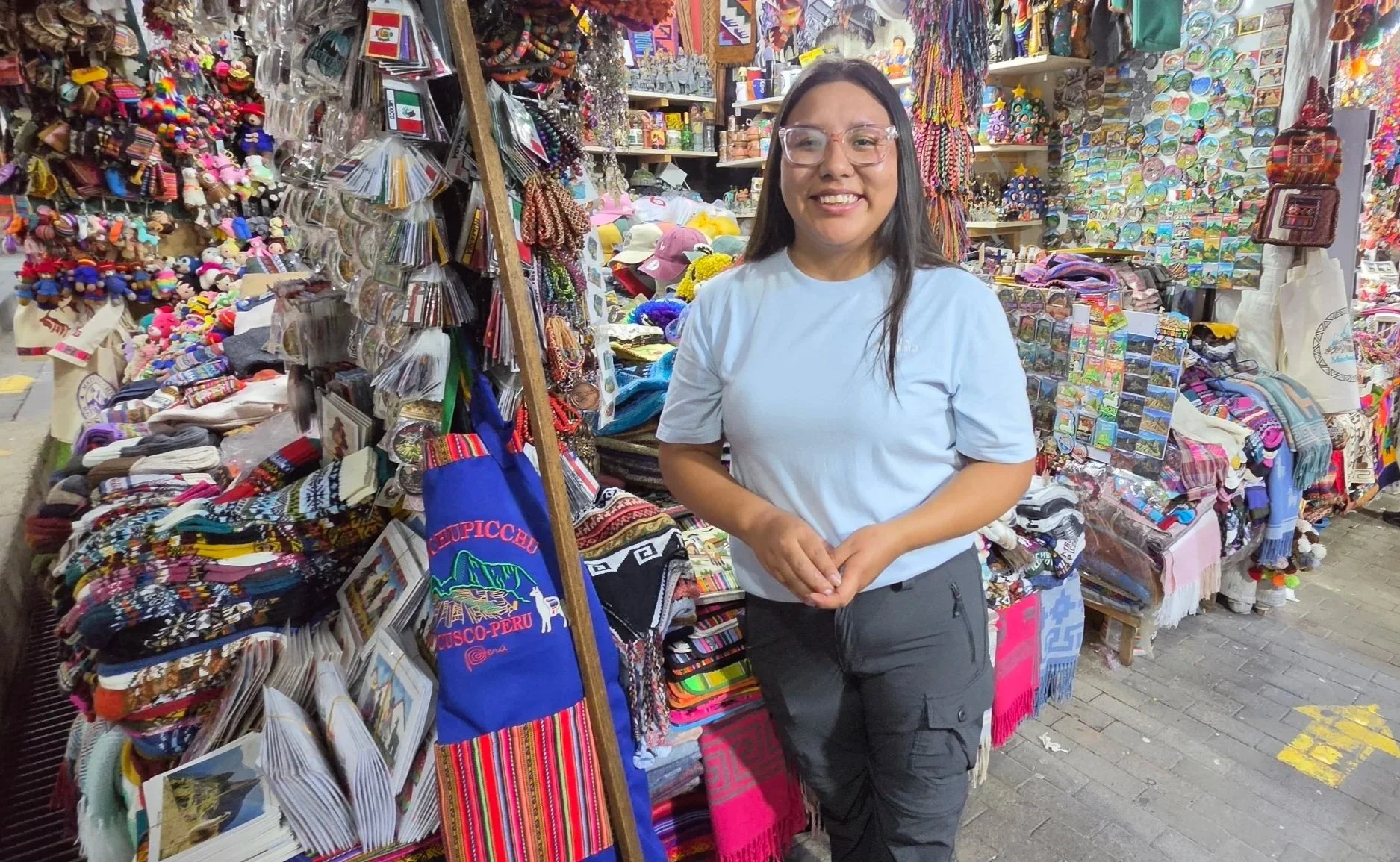
When faced with acres and acres of individual stalls stacked with enticing and colorful wares, each manned by a friendly face enticing you to come and check out their prices, it is impossible to walk away empty-handed. (at least for the weak among us, of which I am definitely one)
Lessons Learned (in no particular order)
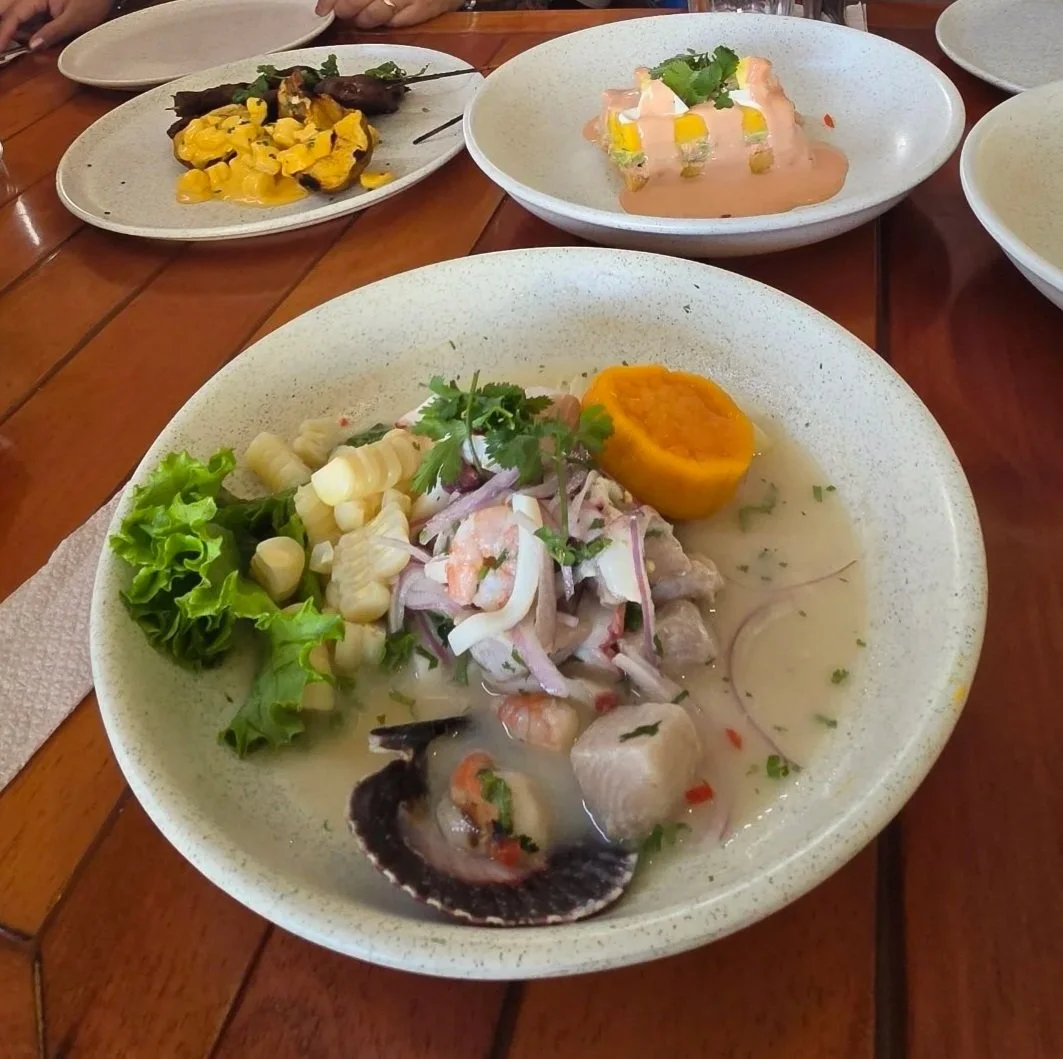
The food in Peru was fabulous and, in Lima at least, almost always involved raw fish (ceviche), the national specialty.
It’s best just to hang on for dear life if you happen to be on a tour bus with a driver who is determined to swerve repeatedly from one lane to the other just to get around one car, then back through those same lanes to get past another car. Best not to look out the window to see how close the bus comes to the cars it is passing, and don’t worry if it happens to turn into a bike lane as it is rounding a sharp corner. As long as no one gets killed, and the driver makes it to the destination, all is fair in city driving in Lima.
When there is a packed itinerary, it’s best to hit the ground running and just try to keep up. Don’t think about the fact that you just survived an all night flight as you are readying yourself for the big family birthday party that afternoon. And try not to look surprised when you discover that instead of the party lasting from 2-7 as you had incorrectly assumed, the band that was hired for five hours won’t get going until after 6. Just embrace the eating, the drinking, the music, the dancing and overall fun of the festive event. You can make up for the lost sleep later.
It’s probably not a good idea to eat raw fish everyday for a week, sometimes multiple times on one day. At some point your digestive system is going to object.
Always wear long pants and long sleeves when visiting Machu Picchu. And if you have any skin exposed don’t be surprised when you discover large, red welts all over your arms and legs. (see above observation about the black flies)
Don’t forget to remove your phone battery charger from the bag you thought you were going to carry onto the plane but decided instead to check. If you do forget then an airport staffer will pull you out of your boarding line at the gate, take you down into the bowels of the airport and out to the tarmac, where they will pull your offending piece of luggage off the loading cart and make you open it and find the battery. Once you do, they will confiscate it, never to be seen again.
When you are traveling and staying in hotels and your plane or train does not leave until 10 or 11 pm and you are exhausted or sick, definitely book an extra night at the hotel so that you can crash your tired, aching, feverish body while you wait until it is time to leave for the station (or airport). You won’t regret it and it is totally worth the extra cost.
Don’t go anywhere in Peru without toilet paper on your person. If you don’t happen to have any, you may have to improvise.
It is best not to be too locked into a travel itinerary, and to know when to pivot to a new plan. When that new plan also falls apart, it’s best to simply pivot again and not look back even if you lose the money for the tour you now have to miss.
It is important to keep a sense of humor about all the disasters that befall you or your travel companions. Whether it is vomiting and fainting at 3am as you try to get out the door to make a 6am flight, to diahrrea from all the raw fish and who knows what else, to discovering one of you is Covid positive (which means the rest of you probably are or were or will be), to fighting head colds and chest congestion, you just stay together and help each other along so that you make your connections and catch up on rest as best you can. “One for all, and all for one” is the order of every day.
Travel with a doctor whenever possible. She will have a treasure trove of medications in her backpack, and will know what is needed from the pharmacy. When your doctor gets sick, be prepared to step up to the plate and provide whatever support she needs (and hope that your own illness has subsided by then), because if she is also your travel coodinator you may still need her to be functional enough to work out the trip logistics and numerous itinerary adjustments and get everyone to every connection on time. She may also be your primary translator and you may need to prop her up from time to time when negotiating Ubers or hotel check-ins, or asking for directions and the like.
Feeling lousy and out of breath all the time is no excuse to stop shopping. You still look like a tourist with a target on your forehead everytime you pass by a vendor’s stall and in your weakened state will no doubt be roped in and convinced to pay exhorbitant prices for trinkets you don’t need. Be careful about what catches your eye because you may end up buying 5 different hats in the space of three days. Or three sweaters and two ponchos when you only intended to get one.
If you are going to go to the trouble of buying several books that detail the history of Peru months before the trip, then you should try to read them before you arrive in the country. If you start reading the book two weeks into the trip, you may regret not being able to fully appreciate the historical significance of the places you already visited.
Pat yourself on the back for figuring out it would be suicide to try to climb up to Machu Picchu from the base town of Aguas Calientes. If you then decide to take the path through the jungle down the side of the mountain (2.1 miles to the bottom) after your Machu Picchu tour, then be prepared for nothing but big stone steps on a very steep grade all the way down. Once you start down you are committed and there is no turning to go back up to get a bus. You may think you’ve reached the bottom several times when you come to a road, only to discover that you must cross the road (without getting hit by one of the constantly running busses that wind their way up and down all day long) and continue down because you are only a quarter or a third of the way to the end. Make sure you have water with you and good shoes because it is rough terrain from top to bottom. Did I say it is a very steep grade? A walking stick is a must-have as well.
It is possible to have a fabulous time even when things don’t go as planned when you have the traveling companions I did. I would go anywhere with Conrad and Maria. We made a good traveling team and were able to figure out how to have a good time together even when we were sick and miserable. Having each other’s back in the tough times made it that much more special when we did the really fun stuff. Flexibility and a good nature and willingness to adjust expectations and plans without regret, along with a sense of humor about everything made this adventure memorable.
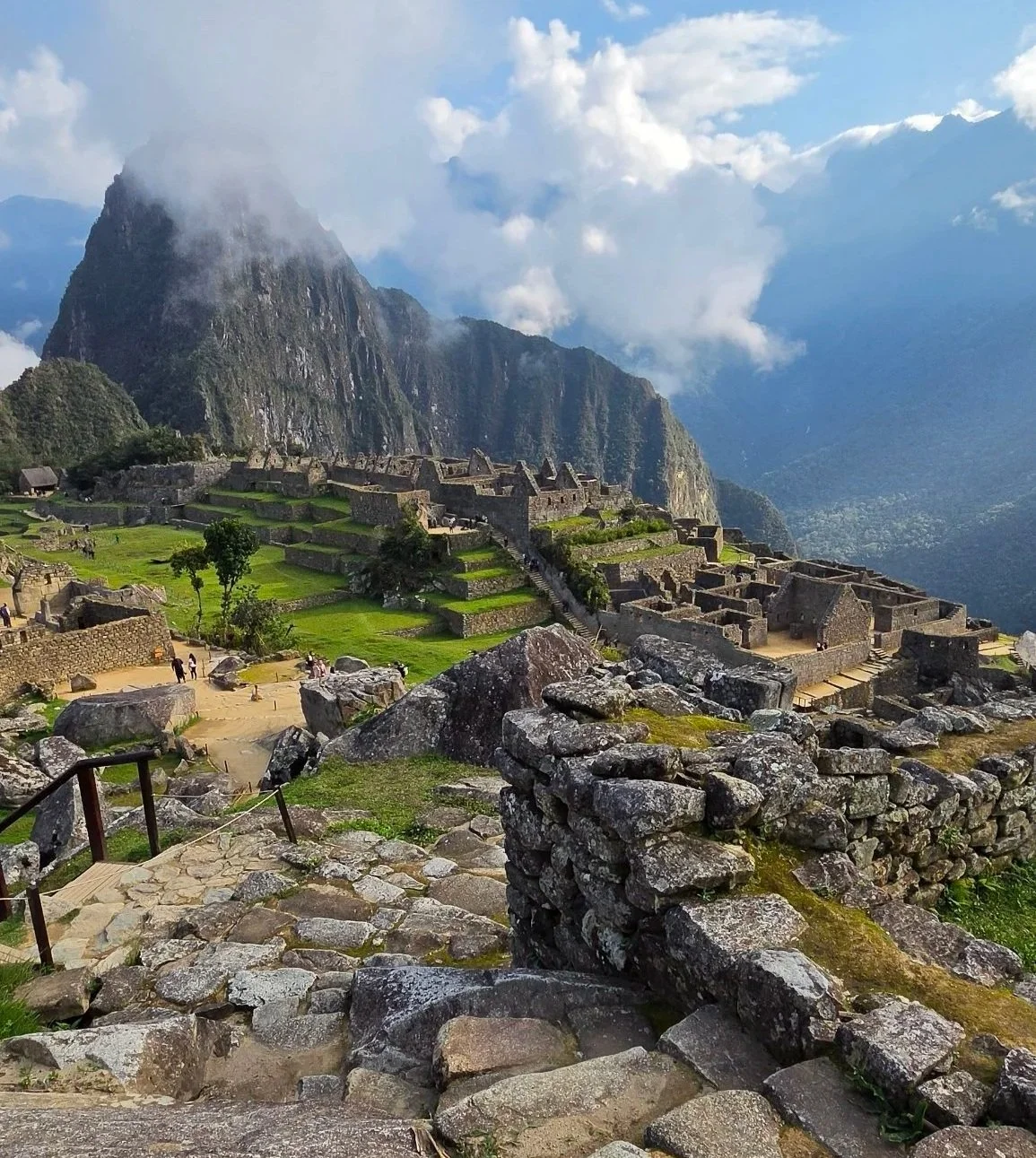
Machu Picchu was every bit as magnificent as I had heard.
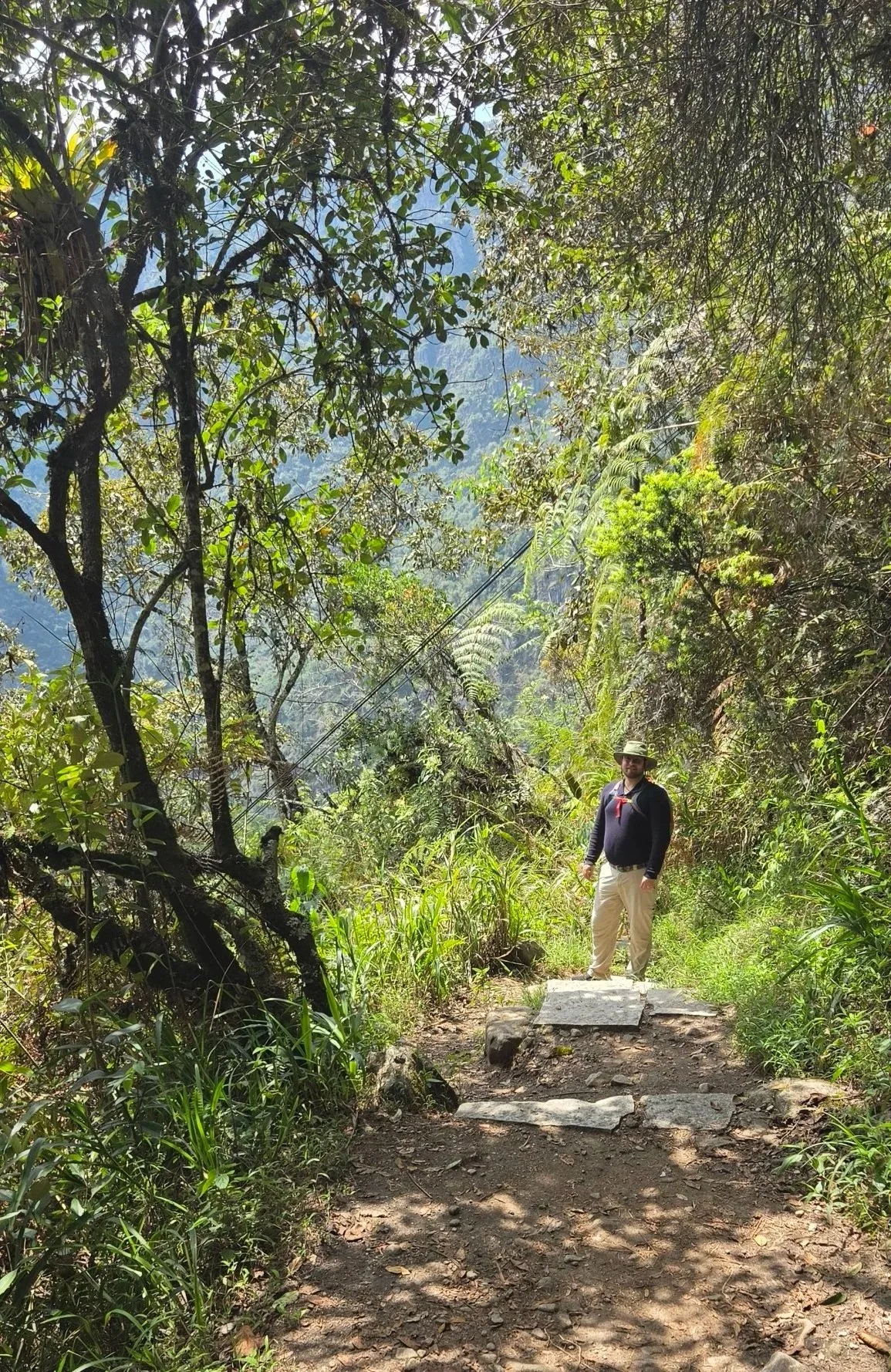
The trek down the mountain was challenging and exhausting, but we made it!
Next Steps
Once I get back to Michigan I’ll have a week or so of rest and relaxation to recover from the Peru trip. Then I’m headed to North Carolina for one of my favorite bluegrass festivals on the Outer Banks. I’ll be prepping NelyBly for the roadtrip and coordinating with my camping buddy Kim and my brother Daniel, who will be joining us at the festival. Stay tuned!